
Graves County Criminal Court Records
A criminal court record is the court's case file once an offense is filed into the judicial process. In Graves County, the Circuit Court Clerk is the local keeper of Circuit and District Court records. The file can start with a citation, complaint, information, indictment, or other charging document, then expand as the case moves through arraignment, pretrial hearings, motions, plea settings, trial, disposition, and sentencing. A full criminal court record may also include bond entries, probation conditions, restitution, costs, and payment eligibility.
Kentucky's court structure matters. Circuit Court handles felony criminal cases and other general-jurisdiction matters. District Court handles misdemeanors, violations, traffic, arraignments, and felony probable-cause hearings. A felony may appear first in District Court for an early hearing and later in Circuit Court after indictment or information. The charge detail itself is covered more closely in Graves County arrest records and court charges, while this page treats the criminal case file as a whole.
Search Graves County Criminal Cases
The public online path for Graves County criminal court records starts with KYeCourts public records guest access and the KCOJ docket search. KYeCourts guest access is CAPTCHA-gated and can provide public case information after verification. The docket search is better for hearing-date information because it asks for county, division, date, courtroom, and subdivision. ePay is useful for eligible criminal fines, fees, costs, or citations, but it does not replace the case file. For certified copies, older files, or access questions, the local Circuit Court Clerk is the controlling contact.
- Use the KCOJ docket search for hearing dates and select GRAVES as the county.
- Select District for misdemeanors, arraignments, traffic, and preliminary felony hearings, or Circuit for felony criminal case files and appeals from District Court.
- Use KYeCourts guest access for public case information after the CAPTCHA gate.
- Use ePay only when the search relates to payable fines, fees, costs, or citations.
- Request certified copies or official status checks from the Graves County Circuit Court Clerk.
Because the docket portal warns that results are not official and may change, a Graves County criminal court records search should not treat a public schedule entry as final proof of guilt, dismissal, or sentencing. The official record is the court file maintained by the clerk.
Graves County Criminal Case Flow
A criminal case record grows as the case moves. The earliest public court entry may be an arraignment, citation, or complaint in District Court. A felony may then be bound over or proceed by indictment or information in Circuit Court. Motions and orders can change dates, suppress evidence, amend charges, or set bond terms. The final part of the case record is the disposition and sentence, unless the case later returns for probation, restitution, expungement, appeal, or other post-judgment activity.
Case flow: Charges Filed › Arraignment › Pretrial / Motions › Plea or Trial › Disposition › Sentencing
| Stage | What Happens |
|---|---|
| Charges filed | A citation, complaint, information, or indictment starts the court charge record. |
| Arraignment | The defendant appears, charge and plea issues are addressed, and future dates may be set. |
| Pretrial / motions | The parties file requests, respond to evidence issues, and seek rulings from the judge. |
| Plea or trial | The case resolves by plea, trial verdict, dismissal, amendment, or other court action. |
| Disposition | The record shows the outcome for each charge, not just the original accusation. |
| Sentencing | The court records jail, prison, probation, restitution, costs, fines, or other ordered terms. |
Graves County Criminal Record Fields
Criminal court records in Graves County may include fields drawn from the court case, docket, jail-linked charge table, and ePay balance path. The research did not expose live KYeCourts case documents because public access is CAPTCHA-gated, but the official portals and jail record fields show what a person should expect to verify. The key is to read each charge separately. One arrest can create several charges, and each charge can have its own amended status, disposition, bond entry, or sentence.
| Field | What It Shows |
|---|---|
| Case number | The court identifier used for KYeCourts, ePay, and clerk requests. |
| County / division | Graves County plus Circuit or District Court context. |
| Defendant | The person charged, with attorney and party information where public. |
| Charges | Code, description, type or class, offense date, case number, and OTN where shown. |
| Hearing history | Court dates, rooms, hearing type, continuances, arraignments, and motion settings. |
| Disposition | Guilty, dismissed, amended, diverted, bound over, waived, or other case result. |
| Sentence | Jail, prison, probation, restitution, fines, costs, or other court-ordered terms. |
| Restrictions | Redactions, sealing, expungement, juvenile limits, or withheld sensitive information. |
Graves County Charges vs Convictions
A Graves County criminal court record can show charges that never become convictions. A charge is an accusation filed in court. A conviction is a guilty plea, guilty verdict, or other finding that results in a conviction under the case record. Charges can be amended, reduced, dismissed, diverted, or resolved in several ways. For that reason, users should read the disposition field instead of relying on the charge label alone.
| Point | Charge | Conviction |
|---|---|---|
| Meaning | An accusation filed into the court case. | A guilty result or plea reflected in the final record. |
| Timing | Appears early and may change. | Appears after plea, verdict, or qualifying court action. |
| Record risk | May remain visible unless restricted or expunged. | May affect sentencing, supervision, and official background results. |
| How to read | Check status and amendments. | Check disposition and sentence. |
Graves County Criminal Dispositions
The disposition is one of the most important parts of a Graves County criminal court record. It tells what happened to a charge. A record may show guilty, dismissed, amended, diverted, bound over, waived, or another case-specific outcome. A dismissed charge is not the same as a guilty conviction. A bound-over felony event may mean the matter moved from District Court toward Circuit Court. A diverted matter may have terms that must be met before a final result is clear.
Sentence entries should be read with the disposition, not apart from it. Sentencing can include jail or prison terms, probation, restitution, fines, court costs, treatment terms, or other release conditions. The jail bond page also documents a Graves County process fact: when an offense does not have a preset bond, the offender meets with Pretrial Services within 24 hours of booking, and the Pretrial officer works with local judges to establish bond. Bond details in the case record may not tell the whole sentence.
Graves County Sealed Criminal Records
Restricted Graves County criminal court records can be sealed, confidential by law, or expunged. Sealing hides a record from ordinary public access by law or court order. Expungement is a separate Kentucky process. KRS 431.073 covers certain felony expungement provisions and fees, while KRS 431.079 defines expungement as removal or deletion from official state background checks.
| Point | Sealed | Expunged |
|---|---|---|
| Public visibility | Hidden from ordinary public access. | Removed or deleted from official state background checks. |
| How it happens | By law or court order. | By qualifying Kentucky expungement process and court order. |
| Private copies | May still exist outside the court system. | Not a promise that private databases or news archives disappear. |
| Local contact | Circuit Court Clerk for file access questions. | Circuit Court Clerk for filing and certified-copy questions. |
Graves County Criminal Access
Kentucky public-record statutes help frame access, but criminal case files also depend on court custody and restrictions. KRS 61.871 states Kentucky's open-records policy. KRS 61.872 addresses inspection and written requests. KRS 61.880 gives the ordinary five-business-day agency response rule. KRS 61.878 lists exemptions, including certain criminal investigation and litigation records.
Key point: Court case records, sheriff records, jail records, and prosecutor litigation files can have different custodians and different access limits.
Federal Criminal Records Near Graves
Not every criminal case tied to Graves County is a Graves County criminal court record. Federal prosecutions are separate from Kentucky Circuit and District Court files. Western Kentucky federal matters may involve the U.S. District Court for the Western District of Kentucky, the U.S. Attorney's Office for the Western District of Kentucky, the U.S. Court of Appeals for the Sixth Circuit, federal marshals, or federal prison records. Those files are searched through federal systems, not the Graves County Circuit Court Clerk.
The U.S. Court of Appeals for the Sixth Circuit source is relevant when a criminal case has moved beyond a Kentucky or federal trial court into federal appellate review.
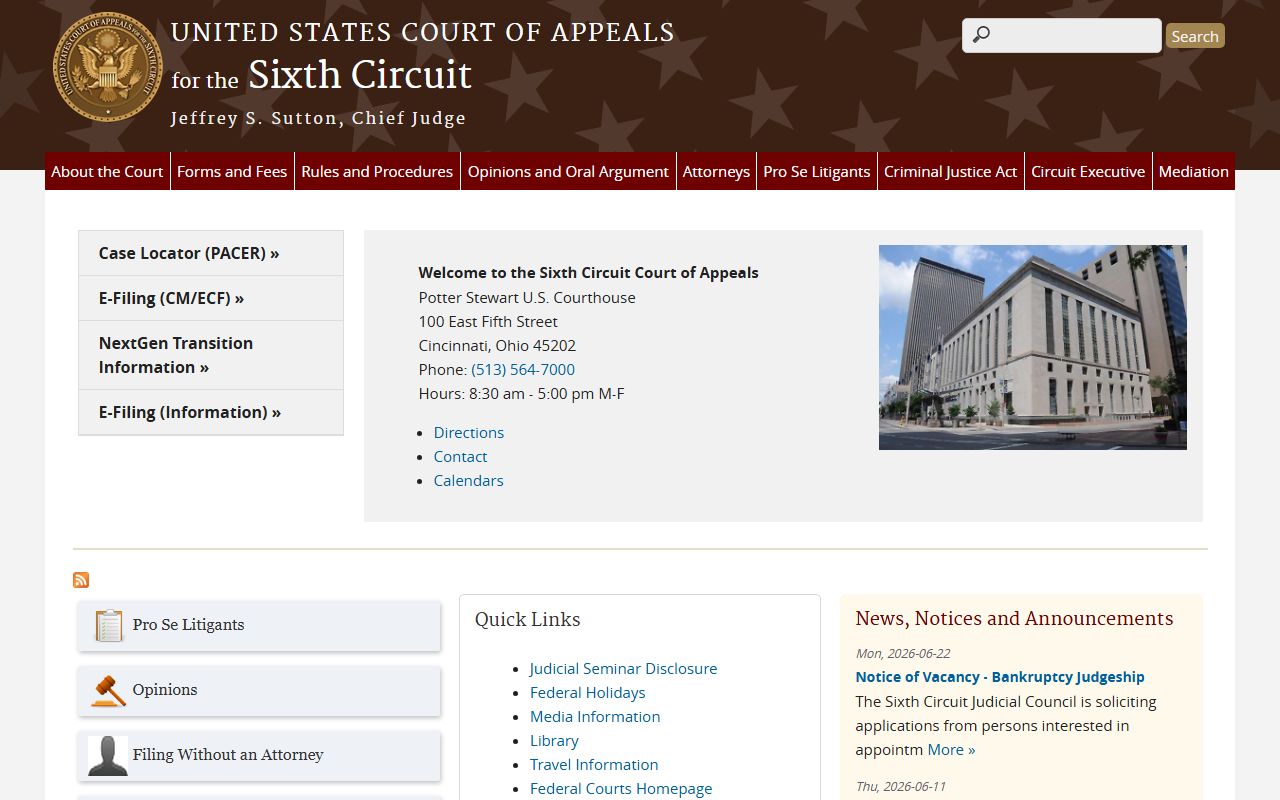
Appellate records can change the posture of a case, but they do not replace the local trial-court file kept by the Graves County clerk.
The U.S. Attorney's Office for the Western District of Kentucky source shows the federal prosecution channel for criminal matters outside Kentucky state trial court.
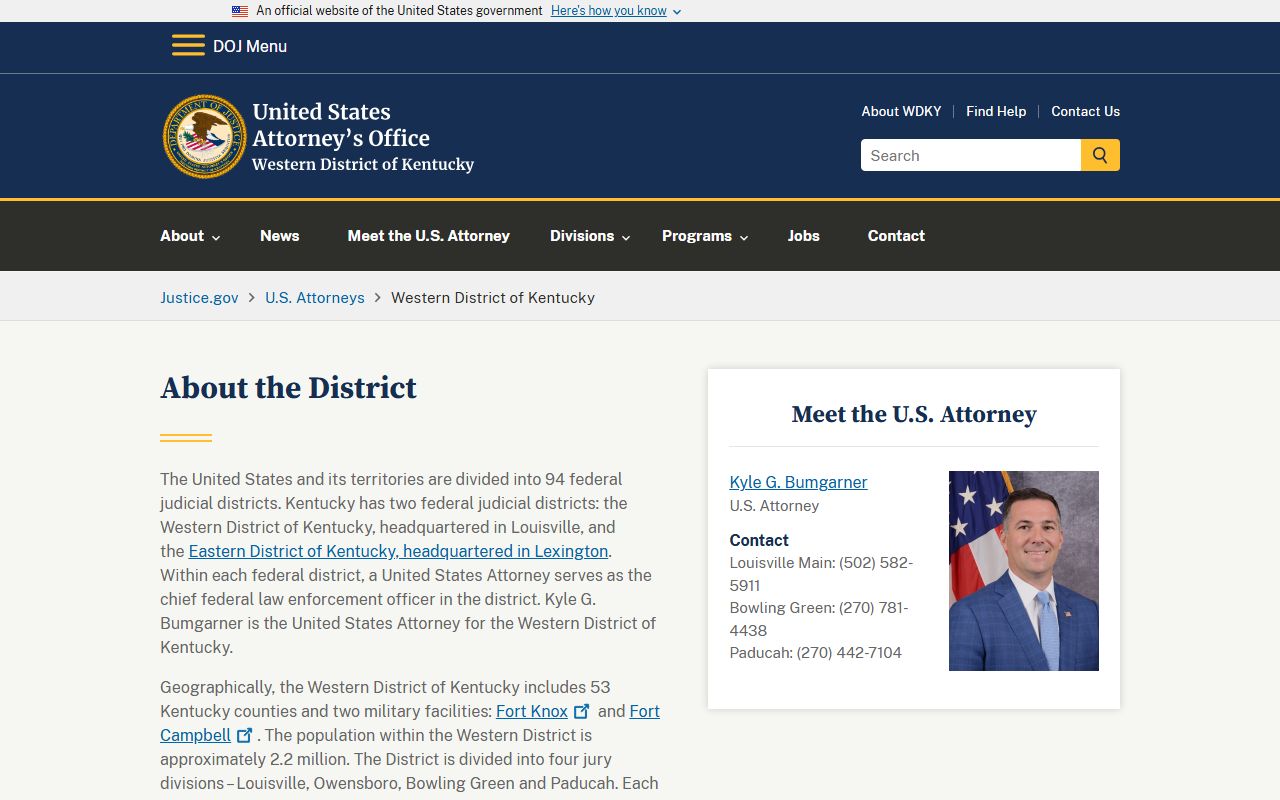
When a case is federal, local docket searches may not show the record, even if the conduct occurred in or near Graves County.
Restricted Graves County Criminal Records
Juvenile matters are the clearest restricted category. KRS 610.320 and KRS 610.340 create separate juvenile record and docket confidentiality rules. Adoption material, mental-health records, minor-identifying data, Social Security numbers, financial account information, and safety-sensitive addresses may also be withheld or redacted. Prosecutor files and some law-enforcement litigation materials may be exempt under KRS 61.878.
Background checks add another limit. A casual public search is not the same as a regulated employment, tenant, credit, insurance, or licensing background check. Expunged matters may be removed from official state background checks, but private data held outside the official court system can have separate correction problems. For Graves County criminal court records, the court file should be verified through the Circuit Court Clerk before anyone relies on a public portal result.
Public Record Search
Sponsored Results